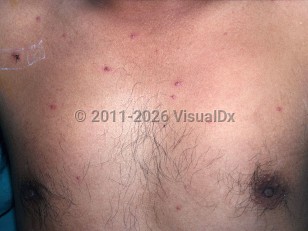
Talaromyces marneffei (previously Penicillium marneffei) is a dimorphic fungus endemic to Southeast Asia that rarely caused disease before the HIV era. This fungus can be cultured from the soil but is also commonly cultured from bamboo rats and other commensal rodents.
Presumably, the fungus is inhaled like other dimorphic fungi and then spreads systemically. There is no evidence for zoonotic transmission. Primary cutaneous disease has been rarely reported, as has vertical transmission from birthing parents with AIDS to infants. Disseminated disease may occur immediately or during reactivation decades later.
Cutaneous disease is often accompanied by fever, weight loss, hepatosplenomegaly, and lymphadenopathy, along with gastrointestinal complaints like diarrhea or abdominal pain. Pulmonary involvement presenting with cough, dyspnea, and diffuse or localized infiltrates on imaging, as well as bone, joint, and central nervous system (CNS) involvement, has also been reported.
In addition to HIV/AIDS (average CD4 count less than 75), other states of immunocompromise have been associated with talaromycosis, including hematologic malignancies, systemic lupus erythematosus, nasopharyngeal carcinoma, solid organ transplants, solid organ malignancy, and tuberculosis.
Occupational exposure to soil, especially during rainy seasons, has been reported as a risk factor. Northern Thailand is one of the most highly endemic areas. Thai residents from other parts of the country and travelers from other countries who succumb to talaromycosis usually report travel to this area.
Talaromyces marneffei infection
Alerts and Notices
Important News & Links
Synopsis

Codes
ICD10CM:
B48.4 – Penicillosis
SNOMEDCT:
372936000 – Infection caused by Talaromyces marneffei
B48.4 – Penicillosis
SNOMEDCT:
372936000 – Infection caused by Talaromyces marneffei
Look For
Subscription Required
Diagnostic Pearls
Subscription Required
Differential Diagnosis & Pitfalls

To perform a comparison, select diagnoses from the classic differential
Subscription Required
Best Tests
Subscription Required
Management Pearls
Subscription Required
Therapy
Subscription Required
References
Subscription Required
Last Reviewed:12/21/2025
Last Updated:12/28/2025
Last Updated:12/28/2025
Talaromyces marneffei infection