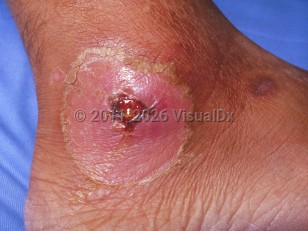

Corynebacterium diphtheriae is a pleomorphic, aerobic, gram-positive bacillus that causes symptoms through the production of a bacteriophage-dependent exotoxin. Human beings are the only known reservoir for C diphtheriae, which can only inhabit mucous membranes and skin and is therefore spread by respiratory droplets or contact with the exudate of a diphtheritic cutaneous lesion, including objects contaminated with discharge from the lesion.
There are 3 forms of cutaneous diphtheria:
- Primary infection, which begins as a pustule or vesicle on previously normal skin
- Superinfection of an eczematized lesion
- Secondary infection of a wound
Risk factors for cutaneous diphtheria include skin trauma, inadequate hygiene, injection drug use, and absence of diphtheria vaccination. Children, older adults, and the immunocompromised are most commonly affected. Endemic areas include Russia, Ukraine, and Latvia, ongoing clusters of cases have been reported in Vancouver and Seattle, and outbreaks have been reported in Europe in refugee populations, including East Africa.