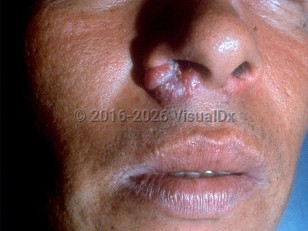
Rhinoscleroma, or Slavic leprosy, is a chronic granulomatous infection of the nasal mucosa, oropharynx, and upper airways caused by the gram-negative rod Klebsiella pneumoniae spp rhinoscleromatis. There are endemic foci in the Middle East, central Europe, Africa, South America, and Central America. It commonly presents during the second to fourth decades of life and shows a female predominance. It is typically seen in individuals from economically challenged and rural areas. Some evidence of intrafamilial transmission has been reported in close living quarters.
The disease is characterized by 3 stages: catarrhal, granulomatous, and sclerotic.
The catarrhal (rhinitic) stage is characterized by persistent fetid purulent rhinorrhea, nasal obstruction, intranasal crusting, sneezing, and occasional epistaxis. Because these manifestations closely resemble chronic rhinitis or sinusitis, diagnosis during this stage is often delayed.
The granulomatous (hypertrophic / proliferative) stage is marked by granulomatous papules and nodules, or polypoid masses in the nasal cavity and oropharynx. Patients may experience worsening nasal obstruction, deformity, dysphonia, dysphagia, or airway compromise, depending on the site of involvement.
The sclerotic or fibrotic stage is characterized by extensive fibrosis and scar formation, leading to tissue destruction, stenosis, and permanent deformity. Fibrotic narrowing of the nasal passages, larynx, or trachea may result in significant airway obstruction and functional impairment.
This progression occurs over months to years. Usually, systemic symptoms are not seen, but chronic headache may be associated.
Codes
ICD10CM: A48.8 – Other specified bacterial diseases
SNOMEDCT: 72409005 – Rhinoscleroma
Look For
Subscription Required
Diagnostic Pearls
Subscription Required
Differential Diagnosis & Pitfalls
To perform a comparison, select diagnoses from the classic differential