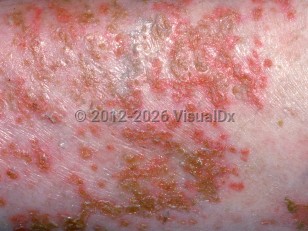
Glucagonoma syndrome refers to the constellation of signs and symptoms that develop in the setting of an underlying glucagonoma, a rare, slow-growing functional neuroendocrine tumor of the pancreatic alpha cells. Excessive glucagon production from tumor cells leads to these clinical manifestations, which include necrolytic migratory erythema (NME), diabetes mellitus, weight loss, anemia, diarrhea, venous thrombosis, and neuropsychiatric disturbances.
NME is the presenting manifestation in over 90% of glucagonoma cases, and it often precedes tumor diagnosis. It classically presents with migrating, annular, erythematous papules, patches, and plaques with superficial necrosis leading to erosions and bullae. The eruption is most commonly located in intertriginous areas. Pruritus and a burning sensation have been reported. Lesions may improve spontaneously and reappear months later, and clinical improvement also occurs after surgical excision or surgical debulking of the pancreatic lesion.
Importantly, NME can also occur without glucagonoma. Cases have been associated with inflammatory bowel disease (Crohn disease, ulcerative colitis), chronic liver disease, pancreatitis, nonpancreatic malignancies, and disorders of malabsorption.
The pathophysiology of NME is not fully understood but is likely multifactorial, involving excess glucagon and/or deficiency of amino acids, zinc, and free fatty acids.
Glucagonoma syndrome
Alerts and Notices
Important News & Links
Synopsis

Codes
ICD10CM:
D37.8 – Neoplasm of uncertain behavior of other specified digestive organs
SNOMEDCT:
16424000 – Glucagonoma syndrome
D37.8 – Neoplasm of uncertain behavior of other specified digestive organs
SNOMEDCT:
16424000 – Glucagonoma syndrome
Look For
Subscription Required
Diagnostic Pearls
Subscription Required
Differential Diagnosis & Pitfalls

To perform a comparison, select diagnoses from the classic differential
Subscription Required
Best Tests
Subscription Required
Management Pearls
Subscription Required
Therapy
Subscription Required
References
Subscription Required
Last Reviewed:02/22/2026
Last Updated:02/25/2026
Last Updated:02/25/2026
Glucagonoma syndrome